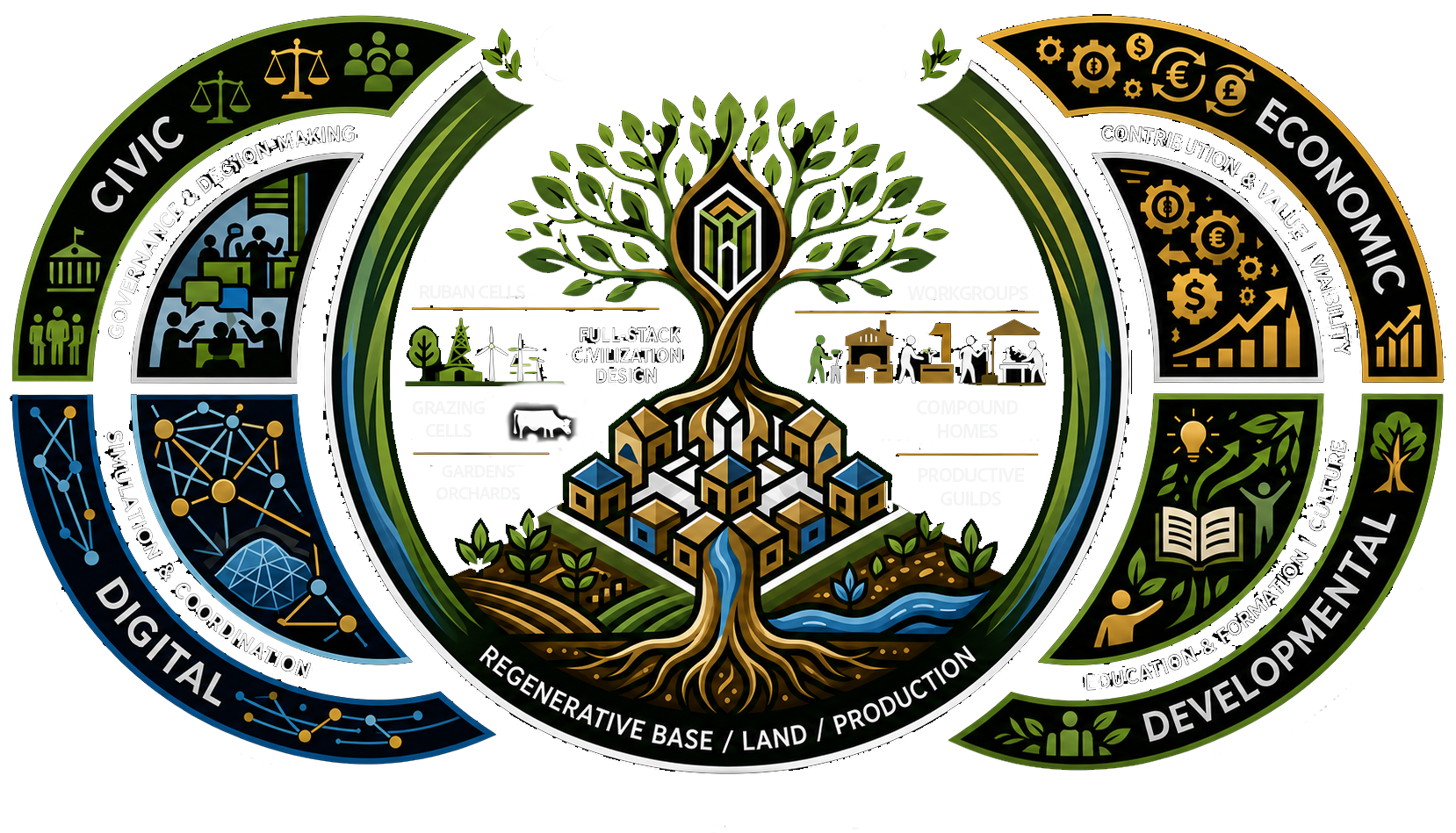
Click the framework to open the navigator
Rubania integrates rural and urban dynamics into one coherent way of life. Not just a village design, not just software, not just an intentional community — a full-stack settlement framework combining land, housing, food, water, energy, governance, education, and economic coordination.
The commitments every cell is built on. Click any block to open its full story.
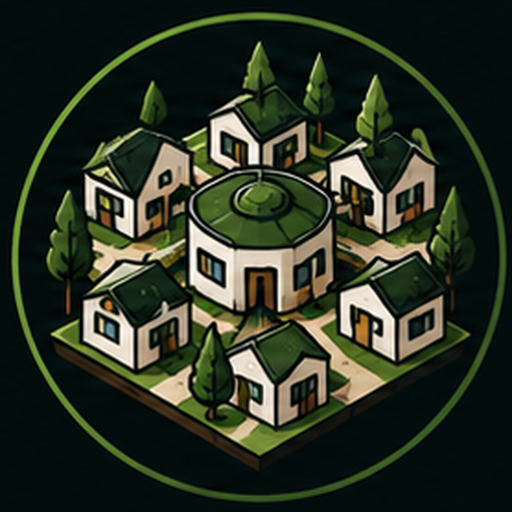
Nested space and scale: compound homes inside guilds inside a cell of roughly 960 people — small enough to stay human and legible, complex enough to be resilient.
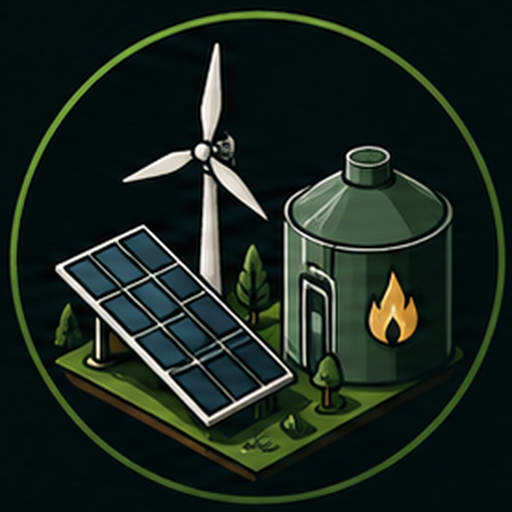
Local, repairable power from biomass and solar. Trigeneration of electricity, heat, and cooling frees the cell from external energy dependence.
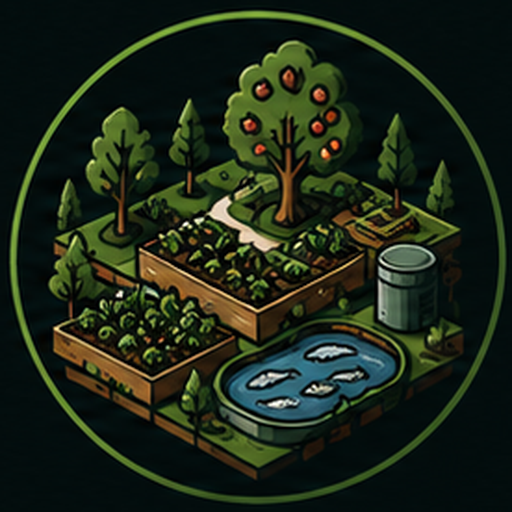
Food forests, orchards, aquaculture, and silvopasture produce fresh produce, fish, eggs, and dairy year-round — grown close to where people live.

Civic OS turns voice, trust, and contribution into shared infrastructure, keeping decisions distributed and legible without hardening into bureaucracy.
One thing seen from six angles — laboratory, experiment, settlement, paradigm, organism, spark.
A living experiment in how humans can cohabit, educate, nourish, and govern themselves within regenerative systems — designed from first principles with permacultural wisdom.
A collaborative and productive endeavor where guilds, families, and individuals co-create a new economic and social fabric — lucrative, just, fraternal, and viral.
Not sustainable — regenerative. A fertile, thriving human settlement that gives back more than it takes, nested in corridors of pristine wilderness where the biome can breathe.
A complete reimagination of human living: how we share, how we learn, how we eat, how we build, how we decide. An open-source pattern language for the next civilization.
Self-making, self-healing, self-governing. Inspired by Bill Mollison's call for a "people system" — a living organism of cooperation responsive to feedback, with long-term goals of stability.
One cell becomes tissue. Tissue becomes a global network. GaiaSapiens is the spark — a replicable, open-source seed that youth, art, and fierce energy can carry to every corner of the earth.
Success isn't only whether one settlement works, but whether the system can replicate. Each cell is meant to become a training ground for future founders — a reticular fabric of autonomous but interoperable settlements, each adapted to place while sharing a common protocol.
The extended family dwelling — the irreducible unit of regenerative life, where food and belonging begin. Six adobe domes around a central core with shared kitchen and workshop. Energy — electricity, hot water, and space heating — is supplied by the Guild's central reactor.
Eight compounds clustered around a shared hub — 50kW downdraft gasifier, moat-mounted agrivoltaic solar, trout raceways, ice production, and a circular greenhouse housing the reactor as solar trap.
The full civilisational unit — self-governing, with its own commons, education, health, and culture. Permaculture zoning from agora centre to wild nature edge.
Intertwined ruban cells spanning the globe, tessellated by natural corridors where wildlife and the biome embrace us. Coordinated by the Ruban Operating System.
At ~960 people the cell reaches the cognitive threshold Dunbar described. Beyond it, identity dissolves and governance must become bureaucracy. The answer is not to grow — it is to replicate. The reticular fabric scales without ever losing fraternity.
Why the geometry keeps the wild corridors unbroken, and how the settlement feeds, waters, heats and teaches itself.
The phased path from documentation and festival, through site selection and build-out, to a replicable network of cells.
The full library — whitepapers, technical references, and essays behind every system on this page.