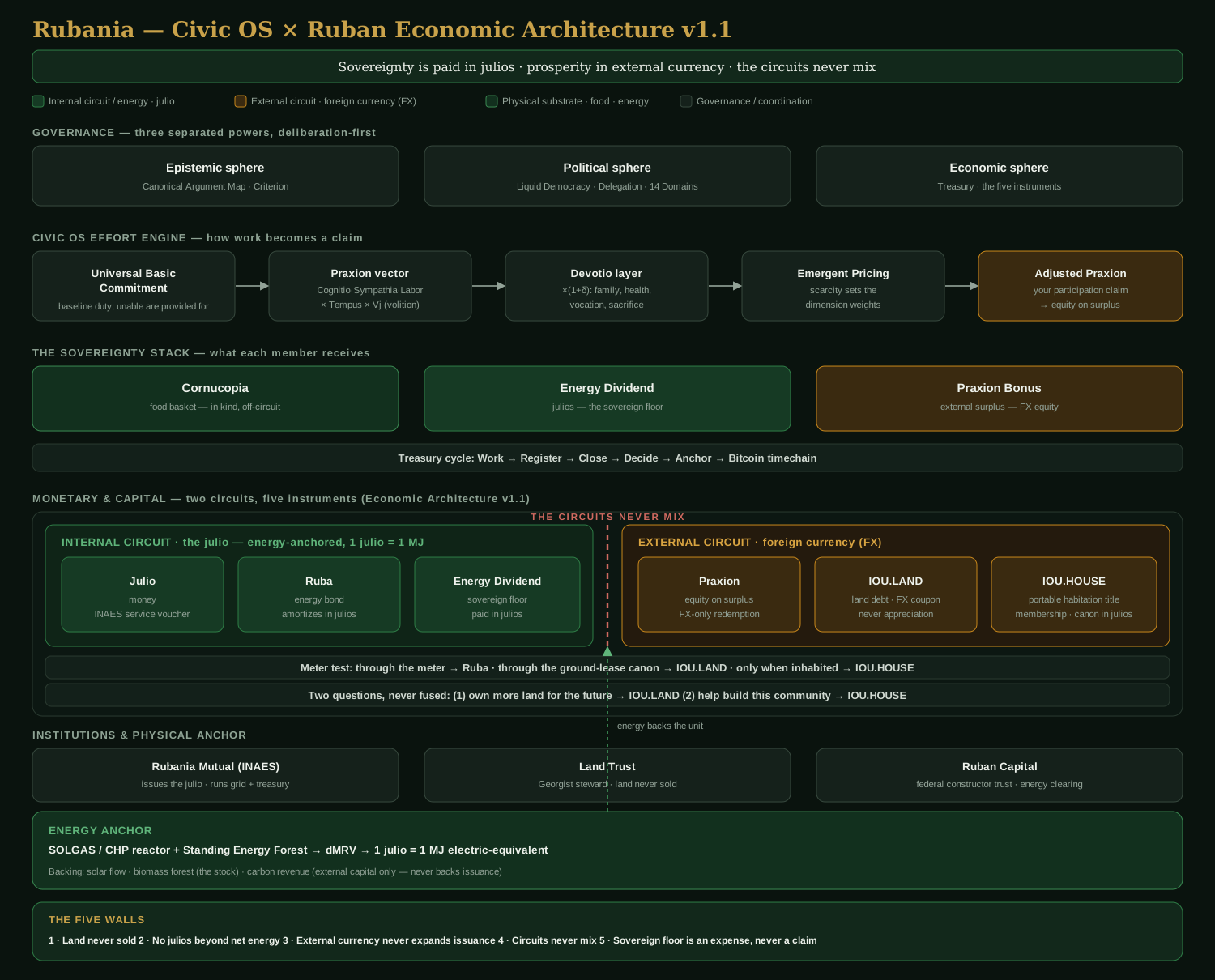
Instrument · Ruban Economic Architecture v1.1
IOU.LAND — the land bond
“I want Rubania to own more land for future generations.” This is the first of the two questions, and the only one that moves capital into the commons.
What it is
The land debt of the Land Trust. Holders contribute capital to a single global patrimony that acquires, protects, and conditions land — swales, dams, roads, ready sites. The unit is capital contributed, never hectares. Land is never sold and never a speculative object; appreciation belongs to the commons.
What it pays
A fixed, modest coupon in external currency, serviced from the site canon — the ground lease a founded cell pays the Trust. Never appreciation: every swale makes the bond safer, not richer.
Your voice
Holders stake on land dossiers, producing a ranked acquisition pipeline for the Trust. The patrimony is global — regional earmarking is rejected, so no contribution buys a claim on a particular place.
Liquidity
Secondary market during the accumulation phase. In the rent phase, redemption windows at an emergent rate, capped at par plus accrued coupon. Land is never sold to fund an exit.
Preferred exit — inward
Conversion into settlement rights: priority position in the IOU.HOUSE queue, with the bond principal applied against the dwelling's construction cost.
Instrument under legal structuring; not an offer. The coupon rate and band are fixed before any subscription opens.
Instrument · Portable habitation title v0.2
IOU.HOUSE — portable habitation title
“I want to help build this specific community.” The second question, asked only after the first, and never fused with it.
What it is
The right of a verified network member to inhabit one standardized dwelling anywhere in the Rubania cell network. It is membership, not property — not a purchase, and not a usufruct. All land and buildings stay with local trusts in perpetuity.
Typified dwellings
Homes are built from a template collaboratively chosen and versioned by the network. The title attaches to a unit of that template class, never to a specific building or address.
Portable
Holders may relocate between guilds and between cells. Relocation reassigns where the title is instantiated; it never alters the title itself, and it moves no money.
Allocated by queue, not by price
Matching runs on seniority, IOU.LAND conversion priority, and guild labour demand — tying housing to the real economy instead of to price. There is no location premium between cells.
What you owe
While inhabiting, a recurring canon denominated in julios: the template's annual energy budget × the local climate factor, plus a maintenance component. The julio is identical across the whole network — 1 julio = 1 MJ everywhere.
Transfer
Only within the member registry, at a formula price indexed to the replacement cost of the template class. No market pricing, no yield, no appreciation.
Instrument under legal structuring; not an offer.